Where are you moving to?
How Good Is Cell Service in Older Buildings in Koreatown, Los Angeles?
Table of contents
- Why Cell Signals Are Sometimes Weak in Older Buildings
- Are Some Carriers More Effective in Koreatown?
- Is this a "Koreatown Issue"?
- How to Check the Cell Signal Before Moving In
- What If A Lease Has Already Been Signed?
- Is Poor Cell Service a Deal-Killer?
- How Signal Is Affected by Building Type
- Why It's More Important Now
- Helpful Tips for Tenants
- Last Thoughts
- FAQs
You endorse the lease. You relocate. You take out your bags.
Then you attempt to call, and it drops.
Cell service is probably not the first priority when looking for Koreatown apartments for rent in Los Angeles. Rent, parking, commute, and safety are typically prioritized.
However, cell reception can definitely become a daily annoyance in older buildings, particularly in crowded urban areas like Koreatown.
Let's discuss it in a practical manner:
- Are older buildings in Koreatown unreliable for cell service?
- Why does it occur?
- Which carriers are more efficient?
- Furthermore, what are the real options available to renters?
Before you sign a lease, here are some things to consider.
Why Cell Signals Are Sometimes Weak in Older Buildings
Problems with cell reception in older apartment buildings are not specific to Koreatown. They are prevalent in densely populated areas that were built before 1980.
The primary causes:
1️⃣ Building Materials That Are Thick
Many of the older structures in Los Angeles were constructed with:
- Concrete reinforcement
- Over metal lath, stucco
- Wall plastering
- Framing made of steel
One reason that older buildings may have bad cell service is that thick building materials like concrete and low-emissivity glass can block signals. Academic studies show that these materials can greatly reduce the penetration of wireless frequencies used in modern networks.
Higher frequencies are frequently used by modern 4G LTE and 5G signals, which travel more quickly but are less able to pass through dense materials.
It's not bad service; that's physics.
2️⃣ Density and Congestion in the Network
Koreatown is one of the busiest neighborhoods in Los Angeles. A high population density means that many devices are vying for the same nearby towers' signal.
According to the FCC, particularly in densely populated urban areas, congestion can lower call reliability and speeds during peak usage hours.
This implies that even though your signal appears "strong," it might not function well on the weekends or in the evenings.
3️⃣ Location of the Interior Unit
Reception frequently relies on:
- If your apartment is facing the street
- Whether it's a higher floor or the ground level
- Close to windows
- Obstacles from nearby structures
The signal strength of a ground-floor unit on a back corner surrounded by buildings and concrete is probably going to be lower than that of a top-floor unit facing the street.
Are Some Carriers More Effective in Koreatown?
Coverage differs from carrier to carrier.
Users can compare coverage across providers using a public mobile broadband map available from the FCC. The map displays the overall outdoor coverage levels throughout Los Angeles, but it cannot guarantee indoor strength in particular buildings.
Major carriers such as Verizon, AT&T, and T-Mobile report robust outdoor 4G/5G coverage in urban LA neighborhoods.
Nevertheless:
Indoor performance in older buildings ≠ outdoor coverage.
This distinction is crucial.
Is this a "Koreatown Issue"?
Actually, no.
This is a problem with "older dense buildings."
Similar grievances regarding reception can be found in:
- Loft conversions in downtown LA
- Pre-war structures in Hollywood
- Rent-controlled properties throughout the city prior to 1978
Newer developments often perform better because they are constructed with:
- Current materials for insulation
- fewer layers that block signals
- Systems of dispersed antennas (in opulent buildings)
- Architecture that takes into account contemporary telecommunications infrastructure
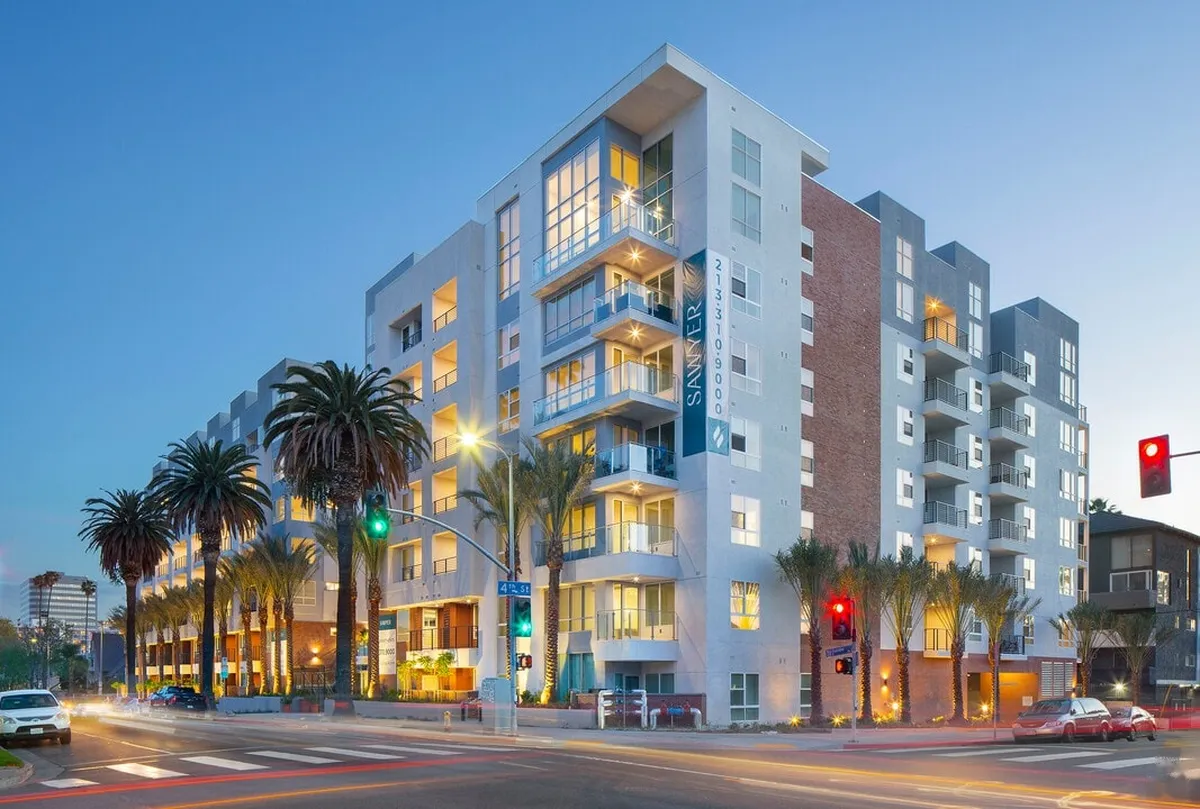
Building age is more important than ZIP code when comparing rental Koreatown apartments in Los Angeles.
How to Check the Cell Signal Before Moving In
One of the most basic—and often forgotten—steps is this one.
While on the tour:
- Enter the device.
- Put the door shut.
- Disable Wi-Fi.
- Call someone.
- Test your speed.
If the signal drops right away, that's helpful information.
Check as well:
- Elevators
- Garage parking
- Hallways
Signals are frequently nearly totally blocked in garages and concrete basements.
What If A Lease Has Already Been Signed?
Avoid panic. Solutions are available.
1. Making WiFi calls
Wi-Fi calling is now supported by most carriers. Unlike cellular towers, Wi-Fi calling enables voice calls over your Wi-Fi connection, according to the FCC.
The majority of indoor call problems are resolved if the building has dependable broadband.
2. Signal Enhancers
When properly registered, FCC-approved consumer signal boosters can legally amplify weak signals.
Although installation guidelines vary, boosters can enhance reception in certain units.
3. Small Cell or Femtocell Technology
Certain carriers provide small in-home network devices that enhance local signal quality and connect to broadband.
Availability varies by provider.
Is Poor Cell Service a Deal-Killer?
Your lifestyle determines this.
When you:
- Work from home
- Make extensive use of voice calls
- Do not wish to rely on WiFi
Then, cellular reception strength is more important.
If your main use is:
- Apps for messaging
- FaceTime
- Zoom
- Wi-Fi at home
Reception problems might then be tolerable.
Take your actual phone usage into account when assessing Koreatown apartments for rent in Los Angeles.
How Signal Is Affected by Building Type
This is a brief explanation:
| Building Type | Likely Cell Performance |
|---|---|
| Pre-1978 concrete | Variable to weak indoors |
| Mid-century stucco | Moderate |
| Newer construction | Typically stronger |
| Luxury high-rise | Often optimized |
Once more, this is general advice; always test the particular unit.
Why It's More Important Now
People are spending more time at home during business hours than ever before due to remote work and hybrid schedules.
The Pew Research Center says that about 35% of U.S. workers who could work from home were doing so all the time. Many others also worked hybrid schedules.
As a result, dependable connectivity is now more crucial than it was even five years ago.
Apartments are more than just sleeping quarters these days. They're workplaces.
Helpful Tips for Tenants
When looking for Los Angeles apartments in Koreatown to rent:
- Test the unit's internal cell service.
- Find out about the reception from current tenants.
- Examine FCC coverage maps.
- Inquire about the building's internet providers.
- Verify with your carrier that Wi-Fi calling is compatible.
Despite not being legally categorized as such, connectivity is now considered to be a component of habitability.
Last Thoughts
Are older buildings in Koreatown unreliable for cell service?
It can be, particularly in apartments with basement parking, interior design, or thick concrete walls.
It's not a neighborhood flaw, though. It is a factor unique to the building.
The main lesson:
Prior to signing, test.
One of the liveliest and most convenient neighborhoods in Los Angeles is still Koreatown. Connectivity shouldn't be an issue if you choose the correct building and quickly check the signal during your tour.
FAQs
1. What is the reason behind my poor cell service in older apartments?
The FCC's wireless interference guidelines state that radio signals can be blocked by thick materials like metal and concrete.
2. Does indoor reception get better with 5G?
Not every time. Compared with lower-frequency bands, higher-frequency 5G signals might have greater difficulty penetrating dense materials.
3. Is it possible for landlords to fix bad cell service?
Tenants can use Wi-Fi calling, signal boosters, or carrier devices to improve coverage, but landlords are typically not required to do so.

Try these popular nearby searches
- Pet friendly homes for rent in Koreatown
- Homes with Parking for rent in Koreatown
- Homes with Private Bathroom for rent in Koreatown
- Furnished homes for rent in Koreatown
- Homes with EV Charging for rent in Koreatown
- Homes with Washer/Dryer for rent in Koreatown
- Homes with Utilities-Included for rent in Koreatown
- Wheelchair Accessible homes for rent in Koreatown
- Homes under $800 for rent in Koreatown
- Homes under $900 for rent in Koreatown
- Homes under $1000 for rent in Koreatown
- Homes under $1200 for rent in Koreatown
- Homes under $1400 for rent in Koreatown
- Homes under $1500 for rent in Koreatown
- Homes under $2000 for rent in Koreatown
- Homes under $2500 for rent in Koreatown
- Homes under $3000 for rent in Koreatown
- Short Term for rent Koreatown
- Open House for rent in Koreatown
- Instant Move-in for rent in Koreatown
- Special Offer for rent in Koreatown
- Cheap homes for rent in Koreatown
- Luxury Apartments for rent in Koreatown
- Premier Koreatown Home Rentals
- Best homes for Rent in Koreatown
- 1 Bedroom homes for Rent Under $2,000 in Koreatown
- Coliving Spaces in Koreatown
- Pet friendly homes for rent in Koreatown
- Homes with Parking for rent in Koreatown
- Homes with Private Bathroom for rent in Koreatown
- Furnished homes for rent in Koreatown
- Homes with EV Charging for rent in Koreatown
- Homes with Washer/Dryer for rent in Koreatown
- Homes with Utilities-Included for rent in Koreatown
- Wheelchair Accessible homes for rent in Koreatown
- Homes under $800 for rent in Koreatown
- Homes under $900 for rent in Koreatown
- Homes under $1000 for rent in Koreatown
- Homes under $1200 for rent in Koreatown
- Homes under $1400 for rent in Koreatown
- Homes under $1500 for rent in Koreatown
- Homes under $2000 for rent in Koreatown
- Homes under $2500 for rent in Koreatown
- Homes under $3000 for rent in Koreatown
- Short Term for rent Koreatown
- Open House for rent in Koreatown
- Instant Move-in for rent in Koreatown
- Special Offer for rent in Koreatown
- Cheap homes for rent in Koreatown
- Luxury Apartments for rent in Koreatown
- Premier Koreatown Home Rentals
- Best homes for Rent in Koreatown
- 1 Bedroom homes for Rent Under $2,000 in Koreatown
- Coliving Spaces in Koreatown

