Where are you moving to?
Does Rent Stabilization (RSO) Apply to Koreatown LA Apartments? A Guide for Tenants
Table of contents
- What Is the Rent Stabilization Ordinance (RSO)?
- Are Koreatown LA Apartments Covered by RSO?
- What Does It Mean for Rent Increases If an Apartment Is RSO?
- Do You Have Rights If Your Apartment Is Not RSO?
- What This Signifies for Renters in Koreatown
- Concluding Remark: Why This Is Important
- FAQs:
People who live in Koreatown LA apartments or are thinking about moving there have probably heard of rent control, rent stabilization, and limits on rent increases. But what is the Rent Stabilization Ordinance (RSO) in Los Angeles, who does it apply to, and how does it affect the cost of housing in Koreatown?
Let's break this down in plain language — with real data and local guidelines as backup. So you know exactly what to expect as a renter before signing or renewing your lease.
What Is the Rent Stabilization Ordinance (RSO)?
The Rent Stabilization Ordinance (RSO) is a city law in Los Angeles that establishes legal protections for tenants residing in specific older apartment buildings and caps rent increases landlords can charge. It also describes the conditions under which a landlord may evict a tenant.
The RSO's primary goal is to shield long-term tenants from abrupt, significant rent increases and unjust eviction practices. This is important in competitive markets like Koreatown, where demand for rental properties is consistently high.
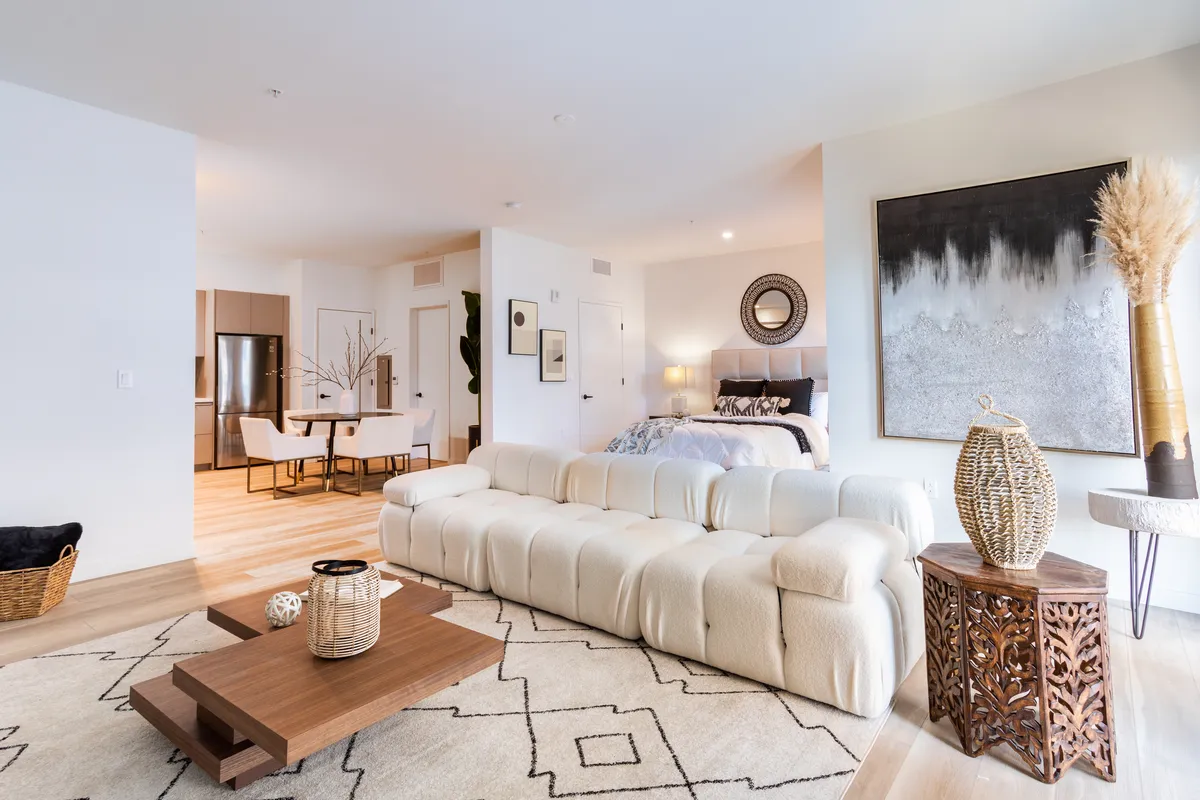
Are Koreatown LA Apartments Covered by RSO?
The important fact is that while many Koreatown apartments are covered by RSO, not all of them are.
Why?
Only buildings that satisfy certain requirements are covered by the RSO:
- The structure was built by October 1, 1978, or earlier.
- A more recent structure that replaced an older RSO unit (because, under certain circumstances, the law treats the replacement as the original).
In other words:
- Traditional mid-century Koreatown buildings from the 1960s or 1970s? RSO units are common.
- Opulent skyscrapers constructed after 1978? RSO typically does not cover it.
- Innovations from the 2000s or 2010s? Unless they replaced an older, RSO building in accordance with certain regulations, they are usually not covered. (Source)
How can you determine whether RSO covers your particular apartment in Koreatown?
This is simple in Los Angeles:
- To view the RSO status, go to zimas.lacity.org and enter the property address, or
- You can find out if the unit is RSO-regulated by texting "RSO" and the address to 1-855-880-7368.
What Does It Mean for Rent Increases If an Apartment Is RSO?
When an apartment in Koreatown is classified as RSO, it indicates:
1. Annual Rent Increases Are Restricted
Landlords are only permitted to increase rent under RSO once a year, and only by a predetermined percentage based on inflation. RSO limits will rise to roughly 3% between July 1, 2025, and June 30, 2026, in addition to minor surcharges (such as a $1.61 monthly registration surcharge and a systematic code enforcement fee). (Source)
In practical terms, this means that if your unit is RSO and your rent is currently $2,000 per month, your landlord can only raise it to roughly $2,060 per month (a 3% increase) for the upcoming year. This is not the unexpected 10–20% increase that we occasionally witness in unregulated markets.
A proposed floor/ceiling (ranging from 1% to 4%, tied to the Consumer Price Index, or CPI) was introduced in some recent city updates to further clarify how landlords can modify rents. (Source)
2. Notice Is Needed for Rent Increases
Before raising rent, landlords are required by RSO and related tenant protections to provide adequate written notice. This notice is usually 30 days for increases up to 10% and longer for larger changes. Tenants have time to prepare or bargain as a result. (Source)
3. There Are Few Grounds for Eviction
Not only does RSO limit rent increases, but it also means a landlord can evict you only for legitimate reasons (also known as "just cause"). Such as nonpayment or major lease infractions, rather than merely because they want a new tenant to pay more.
Do You Have Rights If Your Apartment Is Not RSO?
Yes, you probably still have protections even if the city's RSO does not apply to your Koreatown LA apartment:
Protections for Statewide Rent (AB 1482)
Many apartments constructed before 2010 are subject to California's Tenant Protection Act (AB 1482), which caps annual rent increases at 5% plus inflation (but no more than 10%). In many situations, it also calls for "just cause" eviction protections.
Therefore, state law prohibits landlords from making unlimited increases even if your apartment was built in 1990 and is not covered by RSO.
"Just Cause" Rules for the City
Even if your apartment isn't RSO, Los Angeles has a Just Cause Ordinance that prohibits landlords from evicting you without a good reason once specific requirements are fulfilled.
What This Signifies for Renters in Koreatown
For those considering Koreatown LA apartments, consider this realistic breakdown:
- Older buildings (prior to 1978): It's likely that your apartment is subject to RSO regulations, which offer eviction protections and predictable, limited rent increases.
- Newer buildings (built after 1978) are probably not RSO, but they are probably still subject to city "just cause" eviction requirements and state rent cap laws (AB 1482).
- High-end or luxury complexes are frequently exempt from RSO, but they are still subject to standard lease laws and state restrictions.
That RSO designation can be significant in a neighborhood as competitive as Koreatown. In essence, it provides tenants with stronger protections and more budget certainty, which many central Los Angeles renters rely on when selecting an apartment here.
Concluding Remark: Why This Is Important
Knowing whether your Koreatown LA apartment is subject to RSO or other rent-limiting laws can save you thousands of dollars over the course of your lease, as housing costs are still high throughout the city.
Tripalink and other similar platforms make it easier to browse listings, but before you sign, make sure to check the landlord's obligations, state protections, and RSO status, especially if you intend to stay longer than a year.
FAQs:
1. Are all Koreatown LA apartments subject to RSO regulations?
No. Although state rent laws may still be applicable, RSO primarily covers buildings constructed on or before October 1, 1978, as well as some replacement units. Many newer complexes are not covered.
2. To what extent can an RSO landlord raise rent annually?
3% a year on average (for 2025–2026), plus minor surcharges — much lower than unrestricted annual increases.
3. Am I still protected if my apartment isn't RSO?
Indeed. California's AB 1482, which restricts rent increases and adds eviction protections, applies to many non-RSO units.

Try these popular nearby searches
- Pet friendly homes for rent in Koreatown
- Homes with Parking for rent in Koreatown
- Homes with Private Bathroom for rent in Koreatown
- Furnished homes for rent in Koreatown
- Homes with EV Charging for rent in Koreatown
- Homes with Washer/Dryer for rent in Koreatown
- Homes with Utilities-Included for rent in Koreatown
- Wheelchair Accessible homes for rent in Koreatown
- Homes under $800 for rent in Koreatown
- Homes under $900 for rent in Koreatown
- Homes under $1000 for rent in Koreatown
- Homes under $1200 for rent in Koreatown
- Homes under $1400 for rent in Koreatown
- Homes under $1500 for rent in Koreatown
- Homes under $2000 for rent in Koreatown
- Homes under $2500 for rent in Koreatown
- Homes under $3000 for rent in Koreatown
- Short Term for rent Koreatown
- Open House for rent in Koreatown
- Instant Move-in for rent in Koreatown
- Special Offer for rent in Koreatown
- Cheap homes for rent in Koreatown
- Luxury Apartments for rent in Koreatown
- Premier Koreatown Home Rentals
- Best homes for Rent in Koreatown
- 1 Bedroom homes for Rent Under $2,000 in Koreatown
- Coliving Spaces in Koreatown
- Pet friendly homes for rent in Koreatown
- Homes with Parking for rent in Koreatown
- Homes with Private Bathroom for rent in Koreatown
- Furnished homes for rent in Koreatown
- Homes with EV Charging for rent in Koreatown
- Homes with Washer/Dryer for rent in Koreatown
- Homes with Utilities-Included for rent in Koreatown
- Wheelchair Accessible homes for rent in Koreatown
- Homes under $800 for rent in Koreatown
- Homes under $900 for rent in Koreatown
- Homes under $1000 for rent in Koreatown
- Homes under $1200 for rent in Koreatown
- Homes under $1400 for rent in Koreatown
- Homes under $1500 for rent in Koreatown
- Homes under $2000 for rent in Koreatown
- Homes under $2500 for rent in Koreatown
- Homes under $3000 for rent in Koreatown
- Short Term for rent Koreatown
- Open House for rent in Koreatown
- Instant Move-in for rent in Koreatown
- Special Offer for rent in Koreatown
- Cheap homes for rent in Koreatown
- Luxury Apartments for rent in Koreatown
- Premier Koreatown Home Rentals
- Best homes for Rent in Koreatown
- 1 Bedroom homes for Rent Under $2,000 in Koreatown
- Coliving Spaces in Koreatown

