Where are you moving to?
What to Know About Lease Terms in Koreatown Apartments Before You Sign
Table of contents
- Koreatown's Standard Lease Term
- What Takes Place If a Lease Is Broken Early
- Koreatown's Short-Term Leases: A Closer Look
- How to Safeguard Yourself Prior to Signing
- Conclusion
- FAQs
You're not alone if you've been looking through Koreatown apartment listings and wondering why so many of them mention "12-month lease" without providing any additional details. Lease terms are one of those things that seem simple until you move across the country for work three months into your lease. Here's a detailed explanation of K-Town lease terms, what early termination actually entails, and what you can do if you want more flexibility right away.
Koreatown's Standard Lease Term
The majority of K-Town apartments have a 12-month lease arrangement. Koreatown is not an exception to this industry standard in Los Angeles. Because it offers predictable income, property managers and landlords favor it. Renters benefit from lower monthly rent compared with shorter arrangements; both parties pay more for stability.
Nevertheless, Koreatown's market is diverse. There are newer co-living and managed apartments near Wilshire and Western, as well as older walk-up buildings close to Vermont Avenue. The type of building can affect the lease terms:
| Lease Type | Typical Term | Rent Premium | Who It's For |
|---|---|---|---|
| Standard lease | 12 months | None (baseline) | Long-term residents, students, professionals |
| Short-term lease | 6–11 months | 10–25% higher monthly | Relocating workers, grad students, travelers |
| Month-to-month | Rolling | Highest (often 20–40% above base) | Maximum flexibility, post-lease extension |
Flexible lease terms are in high demand in a neighborhood like Koreatown, which attracts many USC students, young professionals, recent immigrants, and people relocating from out of state.
What Takes Place If a Lease Is Broken Early
Renters are often caught off guard by early termination. Breaking a lease in California requires more than just walking out with 30 days' notice.
There are some protections offered by California law. If you violate a lease, your landlord is legally obligated to make a *reasonable effort* to rent the unit again under Civil Code Section 1951.2. They can't just let it sit vacant and charge you for the remaining months. However, "reasonable effort" is not strictly defined, and in reality, you might still be in arrears until the apartment is rented out again, which could happen quickly in a busy market like Koreatown, but isn't a given.
Early termination in K-Town apartments usually looks like this:
1. Fee for Early Termination
A specific early termination clause, typically equal to 1 to 2 months' rent, is found in many newer, professionally managed properties. You are released from the remainder of the lease after paying the fee and providing the required notice (usually 30 to 60 days). This exit is the most hygienic.
2. Rent Until It's Rented Again
There is frequently no set termination fee for private landlords or older buildings. Instead, until they find a new tenant, you are responsible for paying the rent. That's two weeks, if you're fortunate. That might take up to two months if the unit sits.
3. Complications with Security Deposits
Your security deposit refund is often affected if you break a lease. After you move out, landlords in California have 21 days to return your deposit (or itemize any deductions). They may use the deposit to cover any unpaid rent balance, which could result in you receiving nothing back.
4. Exits Protected by Law
In certain situations, California law permits lease violations without consequences:
- The Servicemembers Civil Relief Act permits active military deployment
- Sexual assault, domestic abuse, or stalking (with appropriate documentation)
- Problems with habitability: if the apartment is uninhabitable and the landlord doesn't make repairs
- Landlord harassment or illegal entry (Source)
Generally speaking, you are operating under the terms of your particular lease agreement outside of these circumstances.
Koreatown's Short-Term Leases: A Closer Look
Although they are harder to find in K-Town, short-term leases are worth considering if a 12-month commitment seems excessive at first.
Simply put, most buildings don't provide them. Unless the property is specifically built for it, the economics do not favor landlords for shorter terms. However, there are options, and it's worthwhile to start your search with them.
One of the few Koreatown apartments currently accepting 6- to 13-month lease terms is The Sienna, available on Tripalink. For the neighborhood, that range is truly uncommon. You can arrive in K-Town, get a sense of the area, and determine whether you want to stay long-term without committing to a full year with a 6-month lease at The Sienna.
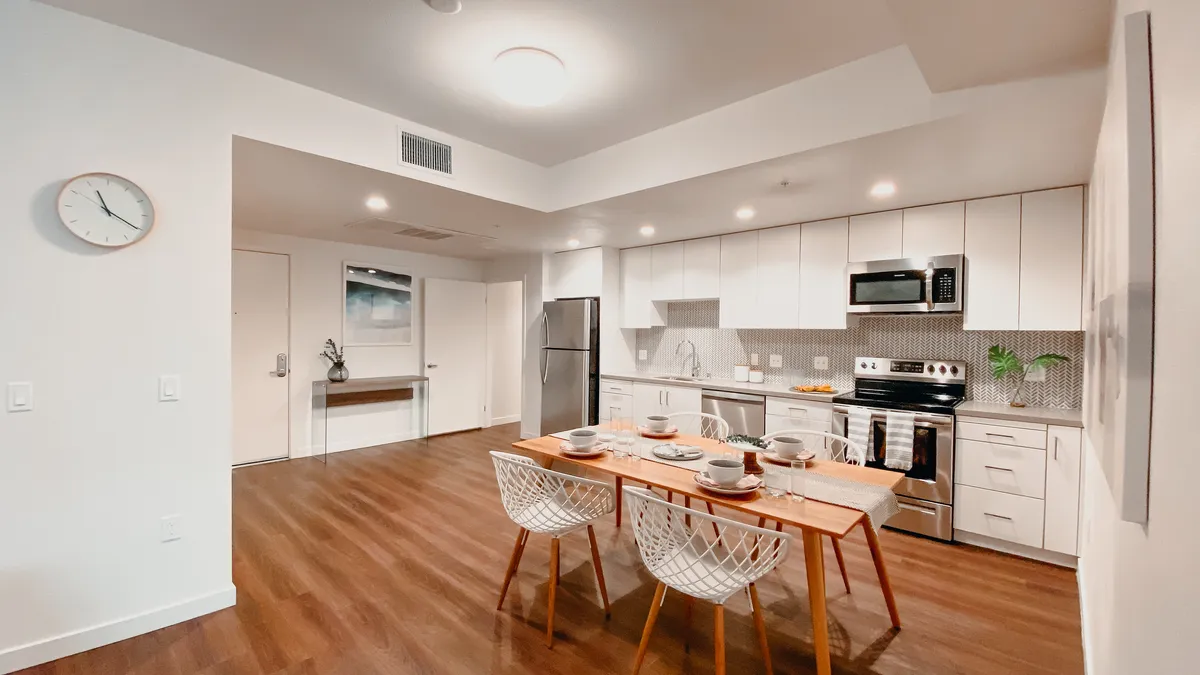
For tenants that are:
- Moving for work with an ambiguous schedule
- Completing a graduate degree within the upcoming semester or two
- Moving to Los Angeles for the first time, and unsure of a suitable neighborhood
- Between longer-term housing arrangements
The cost of month-to-month rates and the rigidity of a 12-month lease are both avoided with a 6–13-month option.
Visit Tripalink's K-Town short-term page to view current short-term listings in Koreatown. Due to limited availability, these typically sell out more quickly than regular listings.
How to Safeguard Yourself Prior to Signing
Here are some things you should read and discuss before signing a lease for an apartment in Koreatown:
Don't assume there is an early termination clause; instead, check it specifically. Before you sign, request that the property manager add one in writing if it doesn't. In most cases, a fixed fee is preferable to an unlimited rent obligation.
Recognize the notice requirements you have. Most leases call for a written notice of 30 or 60 days. You may have to pay an additional month's rent if you miss this window, even by a few days.
Obtain a written copy of the rental policy. Inquire about the building's marketing strategy for empty units. A building that changes listings in two weeks is far less risky than one that takes three months to relist a unit.
Explain what happens at the end of the term. Does your lease automatically become month-to-month? At what speed? On a monthly basis, some buildings reset rent to the current market rate, which could result in a noticeable increase in Koreatown at this time.
Recognize your legal rights in California. A free California Tenants guide that explains lease obligations, security deposits, and repair rights in simple terms is published by the California Department of Consumer Affairs. Before signing, you should read it.
Conclusion
A 12-month lease is the standard in Koreatown, and unless your lease includes a clear exit clause or California law applies to your particular circumstances, early termination carries serious financial repercussions. Matching your lease term to your actual timeline from the beginning is the best way to avoid getting stuck.
Don't sign a 12-month lease in hopes of flexibility if you know you only need 6 or 9 months. Look for homes that specifically offer shorter terms. Although there aren't as many in K-Town, they still exist and are worth the extra effort to find.
FAQs
When an apartment in Koreatown advertises a 12-month lease, is it possible to negotiate a shorter one?
A: In certain cases, yes, particularly in smaller, independently run buildings. The standard terms for larger, professionally managed properties are typically more stringent. Signing during a slower rental period—usually November through January in Los Angeles—when landlords are more motivated to fill units, will give you the most leverage. In return for the shorter commitment, you anticipate paying a higher monthly rate.
Will my credit suffer if I violate my lease in a California apartment?
Breaking a lease doesn't immediately show up on your credit report. However, your credit will be negatively impacted if the outstanding rent is sent to collections. Even in the absence of a formal credit hit, some landlords report to rental screening services (such as Experian RentBureau), which may affect your future rental opportunities. You are protected on both fronts if you negotiate a formal release or pay any agreed-upon termination fee.
What distinguishes a month-to-month lease in Koreatown apartments from a short-term lease?
A short-term lease has terms locked in for a set period, such as six or nine months. Although there is no set end date for a month-to-month agreement, either party may normally terminate it with 30 days' notice. Month-to-month leases give you the greatest flexibility but typically have the highest monthly cost; short-term leases typically offer better pricing stability.

Try these popular nearby searches
- Pet friendly homes for rent in Koreatown
- Homes with Parking for rent in Koreatown
- Homes with Private Bathroom for rent in Koreatown
- Furnished homes for rent in Koreatown
- Homes with EV Charging for rent in Koreatown
- Homes with Washer/Dryer for rent in Koreatown
- Homes with Utilities-Included for rent in Koreatown
- Wheelchair Accessible homes for rent in Koreatown
- Homes under $800 for rent in Koreatown
- Homes under $900 for rent in Koreatown
- Homes under $1000 for rent in Koreatown
- Homes under $1200 for rent in Koreatown
- Homes under $1400 for rent in Koreatown
- Homes under $1500 for rent in Koreatown
- Homes under $2000 for rent in Koreatown
- Homes under $2500 for rent in Koreatown
- Homes under $3000 for rent in Koreatown
- Short Term for rent Koreatown
- Open House for rent in Koreatown
- Instant Move-in for rent in Koreatown
- Special Offer for rent in Koreatown
- Cheap homes for rent in Koreatown
- Luxury Apartments for rent in Koreatown
- Premier Koreatown Home Rentals
- Best homes for Rent in Koreatown
- 1 Bedroom homes for Rent Under $2,000 in Koreatown
- Coliving Spaces in Koreatown
- Pet friendly homes for rent in Koreatown
- Homes with Parking for rent in Koreatown
- Homes with Private Bathroom for rent in Koreatown
- Furnished homes for rent in Koreatown
- Homes with EV Charging for rent in Koreatown
- Homes with Washer/Dryer for rent in Koreatown
- Homes with Utilities-Included for rent in Koreatown
- Wheelchair Accessible homes for rent in Koreatown
- Homes under $800 for rent in Koreatown
- Homes under $900 for rent in Koreatown
- Homes under $1000 for rent in Koreatown
- Homes under $1200 for rent in Koreatown
- Homes under $1400 for rent in Koreatown
- Homes under $1500 for rent in Koreatown
- Homes under $2000 for rent in Koreatown
- Homes under $2500 for rent in Koreatown
- Homes under $3000 for rent in Koreatown
- Short Term for rent Koreatown
- Open House for rent in Koreatown
- Instant Move-in for rent in Koreatown
- Special Offer for rent in Koreatown
- Cheap homes for rent in Koreatown
- Luxury Apartments for rent in Koreatown
- Premier Koreatown Home Rentals
- Best homes for Rent in Koreatown
- 1 Bedroom homes for Rent Under $2,000 in Koreatown
- Coliving Spaces in Koreatown

